CIRCULATORY SYSTEM OVERVIEW
- Distributes oxygen and food throughout the body
- Collects carbon dioxide and excretory products from cells
Components:
- Circulatory fluid: Blood
- Pump: Heart
- Tubes: Blood vessels (arteries, veins, capillaries) and lymphatic vessels
ANATOMY OF THE CARDIOVASCULAR SYSTEM
Four Linked Parts:
- Heart: Motor part; initiates blood circulation
- Blood Vessels:
- Arteries: Carry blood from heart to body
- Inner Layer: Endothelium + elastic membrane
- Tunica Media: Muscular + elastic fibers (thickest layer)
- Tunica Adventitia: Superficial protective layer
- Capillaries: Connect arterial and venous systems; site of substance and gas exchange
- Veins: Carry blood to the heart; same layers as arteries but thinner and less muscular
- Arteries: Carry blood from heart to body
Function:
- Blood travels: Heart → Arteries → Capillaries → Veins → Heart → Lungs → Heart → Tissues
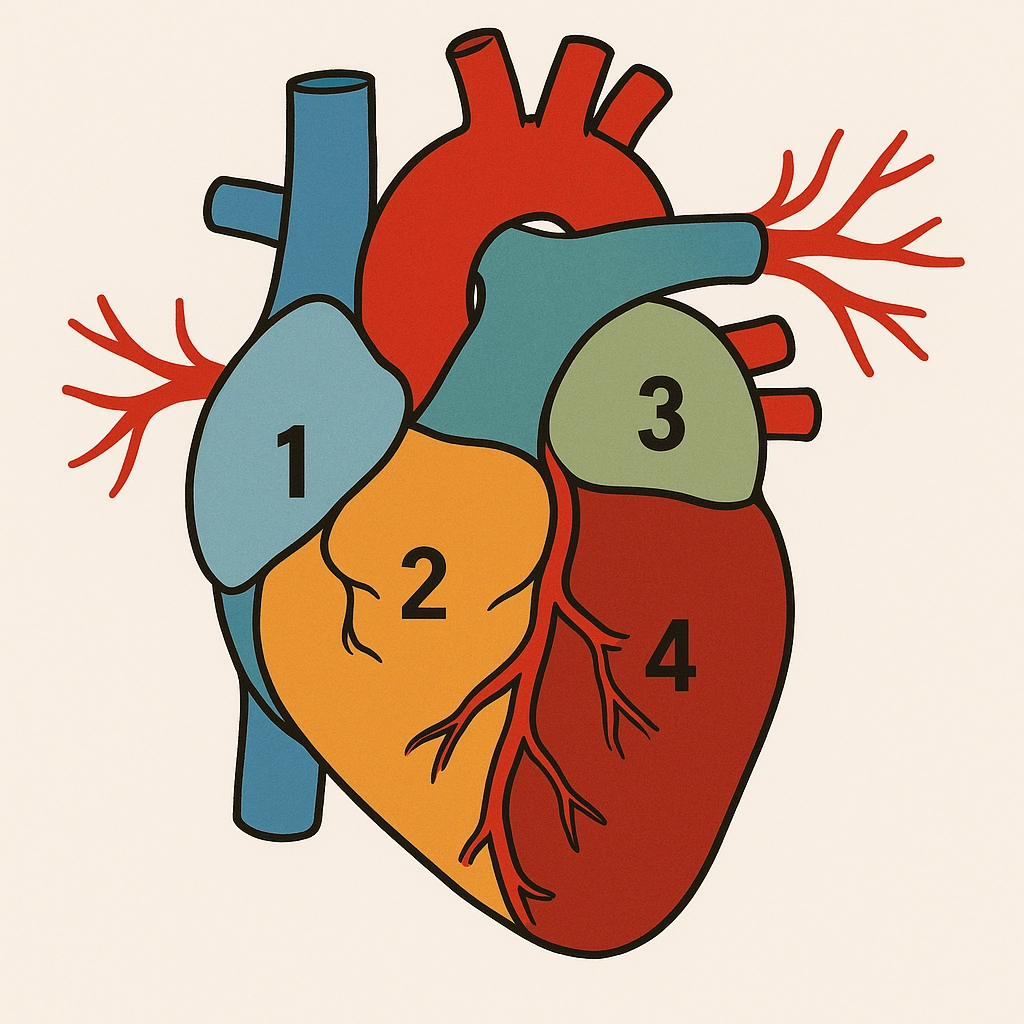
HEART ANATOMY
General Characteristics:
- Hollow muscular organ functioning as a double pump
- Pulmonary Circulation: To lungs for oxygenation
- Systemic Circulation: To body for distribution
Location:
- Central thorax, above diaphragm, between lungs
- Behind sternum, from 2nd rib to 5th intercostal space
Four Cavities:
- Atria: Right (receives from venae cavae), Left (receives from lungs)
- Ventricles: Right (sends to lungs), Left (sends to body via aorta)
Valves:
- Right atrium to right ventricle: Tricuspid valve
- Left atrium to left ventricle: Mitral valve
Functional View:
- Right Side: Receives venous blood, sends to lungs
- Left Side: Receives oxygenated blood, sends to tissues
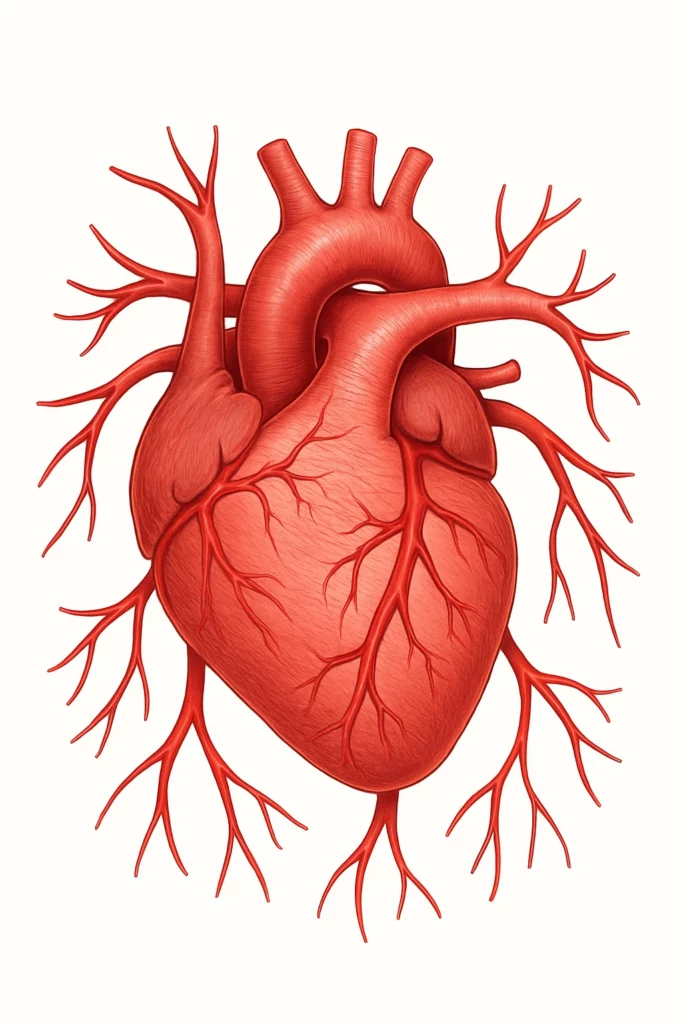
MAIN VEINS AND ARTERIES
Veins:
- Pulmonary Veins: Lungs → Left atrium
- Venae Cavae (Superior and Inferior): Body → Right atrium
Arteries:
- Pulmonary Arteries: Right ventricle → Lungs
- Aorta: Left ventricle → Body
- Carotids: Head
- Subclavian: Arms
- Hepatic: Liver
- Splenic: Spleen
- Mesenteric: Intestine
- Renal: Kidneys
- Iliacs: Legs
HEART RATE
Phases:
- Systole: Contraction, closure of atrioventricular valves, opening of sigmoid valves
- Diastole: Relaxation, heart fills with blood
CARDIAC MUSCLE CHARACTERISTICS
- Automatism: Functions automatically
- Excitability: Self-exciting
- Conductivity: Conducts impulses without CNS
Innervation:
- Pneumogastric Nerves: Slow contraction
- Sympathetic Nerves: Speed contraction
Heart Rate Ranges:
- Normal Adults: 60–100 bpm
- Babies: 100–150 bpm
- Tachycardia: >100 bpm
- Bradycardia: <60 bpm
- Irregular rhythm: Arrhythmia
CIRCULATORY PATHWAYS
Pulmonary (Minor) Circulation:
- Right Ventricle → Pulmonary Arteries → Lungs → Gas Exchange → Pulmonary Veins → Left Atrium
Systemic (Major) Circulation:
- Left Ventricle → Aorta → Body → Venae Cavae → Right Atrium
Coronary Circulation:
- Supplies heart muscle via coronary arteries
THE BLOOD
Function:
- Transport of essential substances and gases
- Takes place primarily in capillaries
Volume:
- Males: 5–6 L
- Females: 4–5 L
Components:
- Plasma: 55%, mainly water, ~10% proteins (albumin, globulins)
- Cellular Elements: 45% (Hematocrit)
Blood Cells:
- Red Blood Cells (Erythrocytes): Carry oxygen via hemoglobin; production via erythropoietin (EPO)
- White Blood Cells (Leukocytes): Defense function
- Polymorphonuclear: Neutrophils, Eosinophils, Basophils
- Mononuclear: Lymphocytes, Monocytes
- Platelets (Thrombocytes): Plug vascular wounds; cell fragments from bone marrow
ADAPTATIONS IN THE BLOOD (EXERCISE)
- Haemoconcentration: ↓Plasma, ↑Hematocrit, ↑Viscosity
- Hemoglobin: ↑During exercise, ↓Post-exercise
- Red cell destruction: ↑With strenuous effort
- Leukocyte count: ↑With exercise
- Moderate regular activity: ↑Immune capacity
- Intensive training: ↓Immune response
- Platelets: ↑Number and size
- Training reduces hypercoagulant tendency
CIRCULATORY ADAPTATIONS TO EXERCISE
- Increased Cardiac Output
- Elevated Blood Pressure
- Blood Flow Redistribution
- Enhanced Venous Return
- Cardiac Adaptations
- Regulation of Cardiovascular Adjustments
Mechanisms:
Between 100–170 bpm, HR correlates with effort; beyond, no direct correlation
- Heart rate & ventricular ejection
- Mean arterial pressure due to stronger contractions and vasoconstriction
- Arteriolar changes: Vasoconstriction (inactive zones), Vasodilation (active zones)
- HR increase linked to intensity, duration, emotional state, temperature, humidity, fitness
- In submaximal exercise, output increases due to stronger ventricular systole
Download this lesson as a PDF so you can study offline.